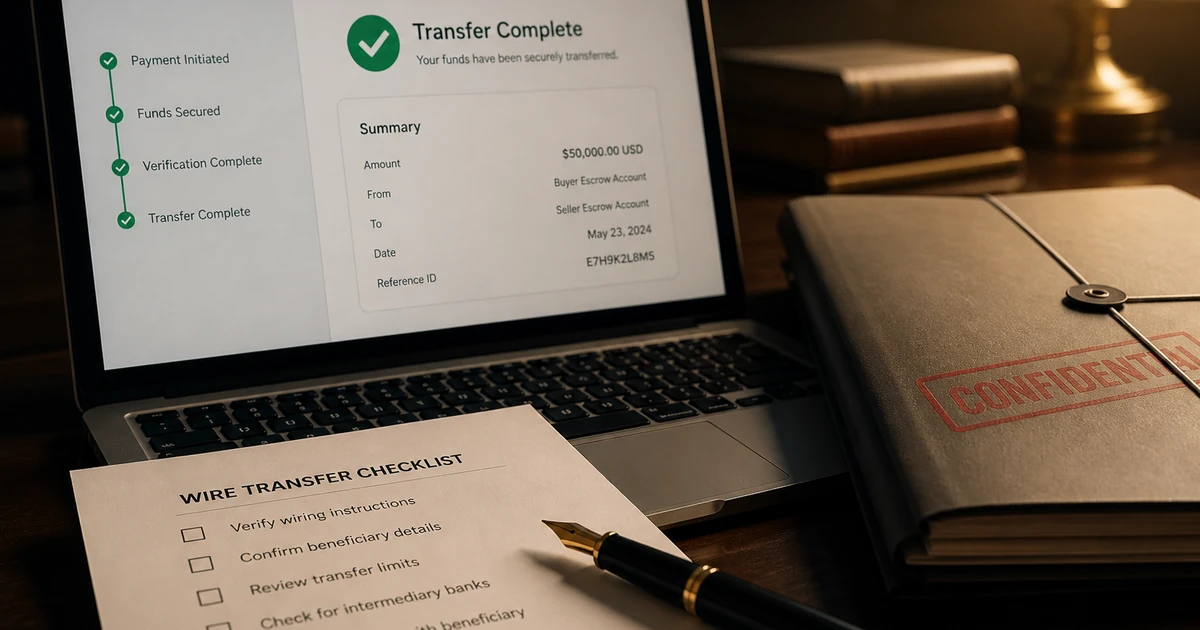
Escrow H1 just dropped: half a billion Australian dollars moved through Escrow.com in the first six months of 2026. I read that number on a Tuesday morning before coffee and still felt it. Freelancer Limited — ASX:FLN, the parent company — reported H1 results showing Escrow.com gross marketplace value at A$517.6 million, up 39% in Aussie dollars and roughly 55% on a constant-currency basis. Most of that volume settles in USD. The headline that actually made me sit up straight: Escrow H1 logged US$255 million in domain transactions in the half, +56% year over year. Check the buyer FAQ escrow notes before you treat volume as a free pass. Escrow H1 is the liquidity signal under the headline.
That's not a rounding error on a parking report. That's real wires, real auth codes, real buyers who decided a string was worth more than the alternative. Andrew Allemann broke it down on Domain Name Wire: about US$128 million in Q1, which implies a similar Q2, and Q2 gross payments ranked among the fourth-highest quarters ever in USD. Domains are still the engine. IPv4 volume jumped about 70%. Wholesale electronics exploded — Escrow.com expects it to become the second-largest vertical eventually — but I'm not writing about phones today. I'm writing about what happens when the industry's default settlement rail is running this hot.
Full confession: I lost a name in May because I treated escrow like paperwork instead of a closing timeline. Seller had two other buyers circling. I wanted one more comp check. They didn't wait. Liquidity doesn't care about my spreadsheet. These numbers are the receipt for that lesson.
What did Escrow.com's H1 2026 numbers actually show?
Freelancer bundles Escrow.com inside a public company, which means we get investor-deck charts instead of forum gossip. The useful bits for domain people:
MetricH1 2026YoY changeWhy it matters Escrow.com GMV — AUD —A$517.6M+39.0%Total payments handled across all verticals Escrow.com GMV — constant currency ——~+55%Strips out AUD/USD noise; closer to operator reality Domain transaction value — USD —US$255M+56%Core aftermarket pulse — our lane Domain Q1 — USD —~US$128M—Steady half, not one freak month Q2 gross payments rank — USD —4th highest ever~+20% vs Q1 GPVAcceleration came partly outside domains IPv4 volume—~+70%Adjacent digital asset liquidity rising tooRead that last row carefully. Q2 total payments grew faster than domain payments alone. Electronics and other categories are pulling the aggregate up. Domains still grew 56% — that's a booming vertical inside a booming platform. It just means the story isn't "domains or nothing." It's "domains plus a lot else." For pricing psychology, domains remain the comp everyone understands.
Product note buried in the release: Escrow.com plans a new front-end experience in Q3. I've watched enough escrow UX refreshes to know interface changes don't create demand — they reduce friction on demand that's already there. The demand is clearly there.
What does hot escrow volume mean for domain buyers?
More money moving through escrow is not automatically good news if you're the buyer. It's a signal. More qualified capital is active. More sellers believe they can clear. More brokers have parallel conversations running. Competition is real again — not 2021 cartoon bidding, but the grown-up kind where the second caller gets a polite "we went another direction."
Three buyer-side shifts I felt before I saw the chart:
- Speed is a diligence skill now. When liquidity exists, hesitation has a price. I'm not saying skip WHOIS. I'm saying know your ceiling before you open the thread.
- Escrow discipline separates closers from tourists. Sellers have options. Buyers who fumble funding instructions, dispute timelines, or ask for off-platform wires look amateur. The platform volume rewards professionals.
- Comps lag volume. Reported sales hit NameBio and DNJournal after close. Escrow GMV tells you money already moved. If you're pricing off last quarter's charts while H1 volume is up 56%, you're negotiating yesterday's market.
I've been cross-checking trophy activity against our midyear 2026 domain sales roundup — AI.com, Green.com, the usual suspects that pull institutional buyers off the sidelines. Those deals don't happen in a vacuum. They train sellers on what "possible" looks like. Escrow volume is the plumbing behind the headlines.
And yes — use escrow. Obviously. I wrote a whole piece on protecting $10K+ purchases through domain escrow because people still try to "save fees" on five-figure names. In a market this active, the bigger risk isn't the 1–2% fee. It's losing the name or wiring a scammer because you were in a hurry. Hot markets attract hot fraud. Stay on Escrow.com or another reputable rail. No exceptions above my personal pain threshold.
What does the boom mean for domain sellers?
Here's the part portfolio owners need to hear without the usual broker perfume: liquidity exists. Not for every hand-reg. Not for your three-word hyphen special. But for quality .coms, strong alternates, and names with obvious buyer stories, the settlement infrastructure is processing more volume than it did last year. A lot more.
That doesn't mean list anything at 10× and wait. It means the bid side is thicker than the doom posts suggest. US$255 million in six months is roughly US$1.4 million per day in domain value alone — blended across sub-$5K transfers and seven-figure brand buys. The long tail matters as much as the press-release tops.
Seller implications I've seen play out in my own outbound:
- Patience has a shelf life. If you get a fair offer and you're not actively building on the name, the market is telling you something. Holding forever is a strategy. It's not the only strategy.
- Lease-to-own competes with cash. When volume is high, installment structures pull buyers who can't wire today but can pay monthly. I've watched sellers choose LTO over cash because the total return looked better. Different risk profile. Not imaginary.
- Broker selection matters more at volume. More deals mean more noise. A good broker routes qualified buyers into escrow cleanly. A bad one burns your listing's social proof.
If you're sitting on an operable category name and wondering whether anyone is still buying — browse what's moving in the premium domain marketplace and compare your ask to live inventory. Names like FactoryArm.com sit in that bucket where the string does marketing before the product ships. Liquidity starts with clarity on who the natural buyer is.
Why should you trust Escrow.com volume as a market signal?
Because it's settlement, not sentiment. Forum posts lie. Twitter screenshots lie. Escrow GMV is money that cleared a regulated-style workflow — buyer funded, asset transferred, seller paid. It's the closest thing we have to a domain payments index without every broker opening their books.
Caveats I'd tattoo on my arm:
- GMV ≠ revenue. Freelancer reports marketplace value handled, not Escrow.com's fee take. Bigger number, different question.
- Domains share the platform. Autos, IPv4, electronics — all in the mix. Domain-specific growth — +56% — is the line to watch for our niche.
- Currency headwinds exist. AUD reporting understates USD strength stories. Constant-currency growth — ~55% — is the fairer read for US-centric domainers.
- One half isn't a decade. Still the best contemporaneous signal we get quarterly.
Freelancer's flagship Freelancer.com marketplace struggled in the same report — bot mitigation, 2FA churn, a payment gateway migration gone wrong. Escrow carried the family photo. That separation is useful: domain aftermarket health is not identical to gig-economy freelance demand. Escrow.com can boom while other lines wheeze.
How should buyers and sellers run escrow in a hot market?
Volume rewards operators who've done this before. Here's the checklist I run on every deal now — buyer or seller, doesn't matter:
- Agree price and structure in writing before anyone opens an escrow file. Cash, LTO, broker commission — spell it out.
- Confirm the exact asset: domain string, registrar, account email, and whether trademarks or sites are included.
- Verify counterparty identity through the broker or escrow party, not a forwarded PDF that could be anyone's.
- Fund escrow from a traceable source on the buyer side; unlock and push only from the seller account that actually holds the name.
- Inspect the transfer within the inspection window — WHOIS, auth test, DNS if relevant. Don't ghost the seller while you celebrate.
- Release funds promptly when the name is in your control. Sellers remember buyers who stall.
- Archive every email and escrow milestone for twelve months. Disputes are rare. They're worse without paper.
Our buyer FAQ covers timelines and edge cases better than I can in one paragraph. For WHOIS, history, and comp pulls before you fund, use the domain tools stack — then escrow. Not the reverse.
Is the domain market overheating or just healthy?
Honest answer: depends which shelf you're standing on. Trophy .coms with obvious AI, fintech, or climate narratives feel competitive. Middle inventory — decent two-word .coms, aging ccTLD bets — still moves, but not every listing gets three offers in a week. The Escrow.com number is aggregate. Your mile may vary.
I don't read +56% and hear "bubble." I read "more serious money changing hands on a trusted rail." Bubbles are built on use and fiction. This is built on wires and transfers. Still — when volume runs hot, bad actors show up. Fake escrow sites. Lookalike domains. "Just send a test wire." The discipline that protects you in a slow market is mandatory in a fast one.
Sellers: don't confuse platform volume with permission to get lazy on pricing research. Buyers: don't confuse volume with proof your specific hand-reg is liquid. Both sides win when they treat escrow as the finish line, not an annoyance between handshake and champagne.
My closing note on Escrow H1: volume this hot means you still use escrow on every serious wire — especially when bidders get aggressive.
I'll be watching Q3 when the new Escrow.com front end ships — mostly to see if faster onboarding pulls even more marginal deals onto the rail. Until then, I trust the half-year math more than my gut. My gut lost a deal in May. Escrow's numbers didn't.