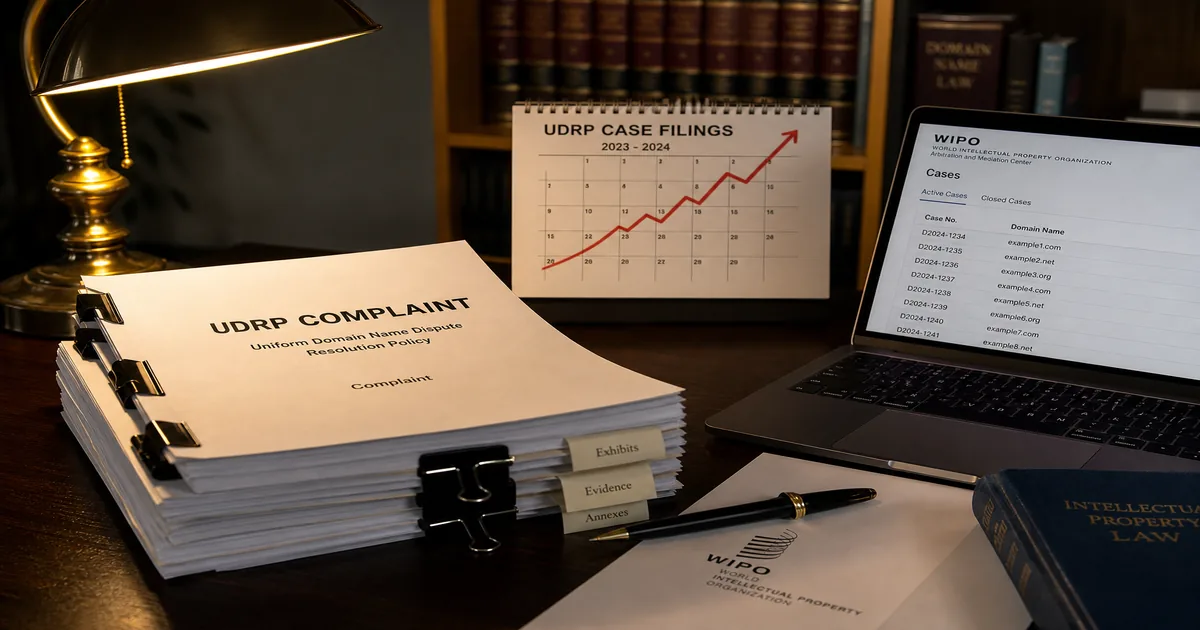
UDRP filings are up about 12% year over year in 2026, according to the caseload trackers I follow at WIPO and the industry press. That is not a blip. It is a busier courtroom for domain owners who thought parking a name quietly would stay quiet forever.
I have defended registrants, advised buyers, and watched brands file complaints they should have negotiated instead. The uptick does not mean every portfolio is doomed. It means the margin for sloppy ownership - no site, no records, vague WHOIS, shady parking - just got thinner.
If you hold premium names as assets, treat UDRP risk like renewal risk: predictable, expensive if ignored, and mostly manageable with paperwork and posture.
Why are UDRP cases rising in 2026?
Several forces stack. Trademark owners are more aggressive in AI and fintech, where a short domain can equal category credibility overnight. Legal teams are copy-pasting playbooks from successful complaints. Brokers leave paper trails that become exhibits. And brands that lost patience during funding booms now have budget again for enforcement.
WIPO remains the busiest forum, but the pattern is global: more complaints, more panels willing to scrutinize bad-faith complainants too - the Reverse Domain Name Hijacking findings we have covered on our blog are the other side of the same coin.
My read: rising volume hurts passive squatters first. It hits thoughtful investors only when they get lazy - or when they pick names that walk straight into someone else's trademark lane.
What should domain owners document right now?
Panels love a paper story. Give them one before you need it.
- Registration rationale - Save emails, notes, or invoices showing why you acquired the name and what category you targeted.
- Development timeline - Even a simple landing page with dated analytics beats naked parking on a contested mark.
- Broker communications - If a brand offered to buy, archive the thread. High opening offers cut both ways; they prove market value and show you were treated as a seller, not a squatter.
- Trademark searches - Run USPTO/EUIPO searches before acquisition and keep PDFs. "I checked" is a defense. "I didn't think to check" is an invitation.
- Renewal and escrow records - Clean chain of ownership matters when complaints allege flipper bad faith.
I keep a one-page dossier per five-figure name. Sounds obsessive. So is losing a domain because you cannot find a 2023 receipt.
How do you avoid becoming an RDNH headline?
Most readers here are owners, not complainants. Still, know the mirror image: brands that file weak UDRP cases get tagged with Reverse Domain Name Hijacking. That helps registrants in the moment - but it does not mean you should poke trademarks for sport.
Avoid RDNH traps on the owner side by not taunting mark holders. No "your brand sucks" landing pages. No fake "fan sites" scraping their logos. No pay-per-click ads keyed on their exact trademark. Panels read tone as evidence.
If you own security-adjacent brandables - names like ExploitGym.app positioned for legitimate training products - lean into the legitimate use story early. Cybersecurity language spooks corporate counsel. Clarity defuses it.
What changes in your parking and monetization setup?
Parking is not illegal. It is a risk multiplier on contested strings. If you park, use reputable feeds, block obvious trademark terms in PPC categories, and disable email capture that could be framed as phishing prep - more on MX records in our related coverage.
I have moved most of my high-value holdings to minimal "for sale" landers with verified marketplace links. Less PPC surface area. Cleaner narrative if a complaint arrives: "This is a listed digital asset with transparent transfer path," not "This is an ad farm monetizing confusion."
Browse how we present defensible product-category names in our cybersecurity collection - the brand story is visible before a buyer ever opens WHOIS.
What is your UDRP defense checklist?
Print this. Seriously.
- Respond on time. Missing deadlines is how good cases die.
- Hire counsel for five-figure-plus names. DIY responses win sometimes; they lose expensively too.
- Attack weak complainant behavior. Prior purchase offers, delayed enforcement, and alternative domains weaken many claims.
- Show rights or legitimate interest. Development, descriptive use, or common-language meaning matters - especially on .ai and dictionary words.
- Keep registrar access secure. Complaints sometimes coincide with social-engineering attempts. Lock the domain. Enable 2FA.
The ICANN UDRP overview is worth rereading quarterly. Policy drift is slow, but panel habits evolve faster than the PDF dates suggest.
Does a 12% spike mean buying is riskier?
It means diligence is non-optional. I am not stopping acquisitions. I am filtering harder - fewer corporate-adjacent strings, more category-native invented names, better files on every purchase.
For acquisition mechanics and transfer hygiene, our FAQ covers escrow expectations. Pair that with external monitoring: set Google Alerts on your top holdings, watch Domain Name Wire for mark owner news, and note when a startup in your space raises a Series B - that is often when counsel sends the first letter.
UDRP volume up 12% is a weather report, not a hurricane warning - unless you built on a floodplain. Document, develop lightly, sell transparently, and keep trademarks out of your hobby lane.
What are panels doing differently in busy years?
When caseload rises, panelists get less patient with vague complaints and with registrants who ghost the process. I have noticed more detailed orders on legitimate-interest arguments - especially for dictionary words on .ai and .io where the complainant's mark is not identical.
Panels also reference prior RDNH decisions more often. That helps owners when brands behave badly. It does not help you if your domain hosts a logo scrape and a "download now" button.
Busy years also mean longer response preparation windows feel shorter. Complaints arrive Friday. Responses due in 20 days. If your records live in three email accounts and a Notes app, you will hate yourself. Centralize now.
The corporate counsel playbook in 2026
Brand teams batch UDRP filings after funding rounds and rebrand announcements. If a startup in your vertical just raised $40M, check whether your holdings include their exact match or confusing variant. Proactive sale conversations beat reactive complaints.
Some counsel still use UDRP as a price-discovery tool - file, see if you fold, then negotiate. Document everything so your lawyer can argue bad faith if it comes to that. The 12% uptick includes these tactics. Recognize them early.
If you are buying on the secondary market, ask sellers for their dispute history and DNS exports before escrow closes. Our drop alerts help you find fresh inventory - pair that with the same diligence you would use on a private sale.
I detest reading panel decisions at midnight. I dislike losing domains more. Spend an hour this week on files you hope nobody ever reads - that is the cheapest insurance in domain investing.
- DN Detector editorial