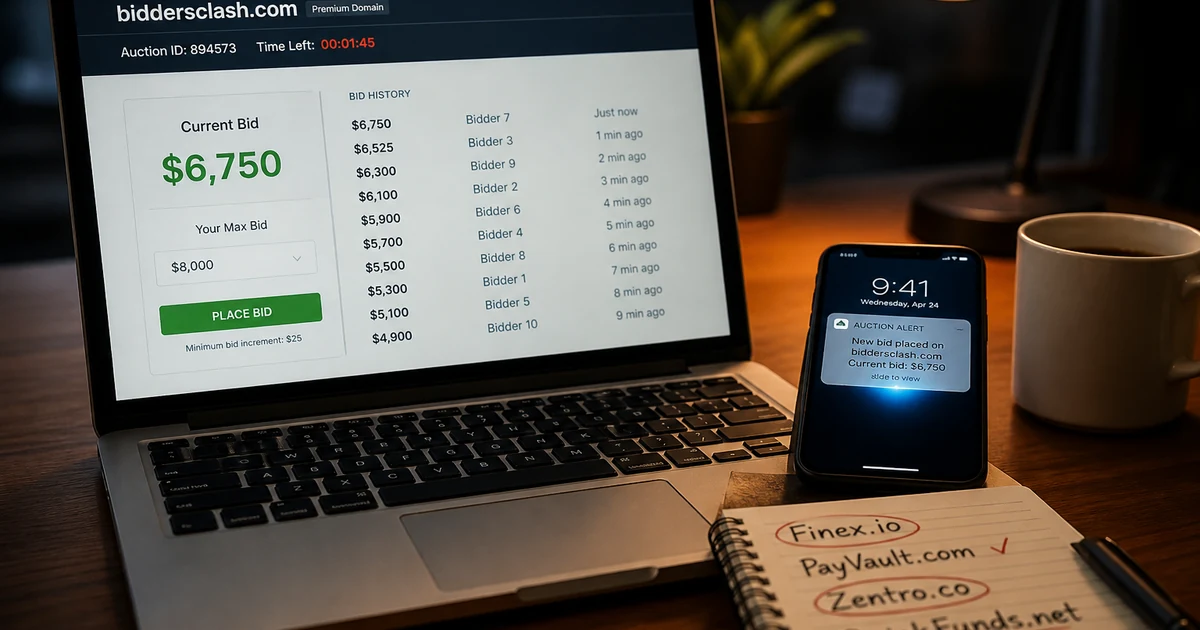
I've been tracking expired domain auctions since before GoDaddy had the polish it does now. Still learning. They still humble me sometimes. The Riggs.com result — roughly $102,000 in a GoDaddy expired auction — was one of those moments where I had to close the tab and come back an hour later to make sure I'd read it right.
Riggs. A surname. Clean .com. No hyphens. No numbers. No modifiers. Just the name. And it cleared six figures in an open expired auction with multiple competing bidders. The winner wasn't speculating on a crypto trend or riding an AI keyword wave. They wanted a name that reads like a bank, a law firm, or a financial platform — because that's exactly what it sounds like.
Full disclosure: I had Riggs.com on my watchlist three weeks before the auction cleared. I didn't bid anywhere near the final number. I was wrong. Whoever did had a specific use case and wasn't trying to time the floor. That's the lesson every expired auction eventually teaches you — the person who wins usually knows why they need it before the clock starts.
What the GoDaddy and DSAD July auctions revealed
The GoDaddy expired auction channel — including the Snap and DSAD pipeline — has been moving interesting names throughout 2026. The Riggs.com and RYU.com results in the same window are worth unpacking together, because they reveal something about what different buyer types will pay in the current market climate.
Riggs.com at ~$102K surprised a portion of the forum crowd. Riggs is a surname that reads premium — it carries the weight of a financial institution or legal practice even before you put a logo behind it. You're buying implied credibility that took other brands decades to build. Instant weight. The type-in history, the clean WHOIS, the professional phonetics — that's what the price is buying. Not the letters. The association landscape. That's the asset.
RYU.com at ~$76K is a different kind of buy with a different buyer logic. Three letters, short, works across cultures — Ryu is a common Japanese name and carries gaming associations that don't hurt the tech audience. The buyers who compete hard for three-letter .com names are rarely speculating. They have a launch timeline, a rebrand in progress, or a specific corporate use case. Paying $76K to avoid three years of explaining "no, not .io, it's actually .com, just — yes, type it again" on investor calls? Easy trade. Most founders I've talked to would sign that check without sleeping on it — no hesitation.
DNJournal covers the headline numbers from these auctions, but the context around the prices usually matters more than the price itself. A $102K surname in July 2026 signals that professional-services and financial-brand demand stayed strong through a period when some corners of the aftermarket went quiet. That's useful calibration data — not just for surname .com investors but for anyone trying to read whether real domain demand is healthy right now. Demand held. That's the signal.
What do expired auctions prove about genuine demand?
I keep coming back to this with expired auctions, and I think it's underappreciated. No appraisal theater. They're probably the purest demand signal available anywhere in the domain market. Purest signal you can get from open competition.
Aftermarket listings are shaped by seller psychology — some people price high and hold for years waiting for the one buyer. Brokered deals are private and influenced by negotiation dynamics on both sides. But an expired auction runs to completion regardless of what anyone feels the name should be worth. If Riggs.com clears $102K in an open GoDaddy window, that's what multiple motivated buyers actually paid to win it at that moment — not what a broker's appraisal suggested, not what a parking page was asking. Real bids. Real money. What real bidders competed for and one of them paid.
That's why I track expired auction results even when I'm not actively buying. They're calibration data. I've tracked them alongside the premium domain hold-rate patterns covered in our piece on premium domain hold rates in 2026. The expired auction channel and the private hold-out market tell slightly different stories about value, but they converge on the same conclusion: short, clean, professional .com names are not commodities, and they're not softening.
If you're trying to understand what a domain is worth before you list it or before you bid on it, check the expired auction history first. Not the asking price on a parking page. The price where two informed bidders competed until one stopped.
What types of names moved in this auction window?
Beyond the headliners, I noticed several patterns across the full July window that I think are worth flagging for anyone actively watching the GoDaddy and DSAD channels.
Numeric domains — particularly two and three-character numeric .com names — continued to find buyers in the $5K–$40K range. There's a specific collector base for these, concentrated in markets where numeric associations carry cultural and investment value. If you're not already familiar with that market and its logic, don't try to trade in it speculatively. Specialists only. It rewards specialists and punishes generalists. Generalists lose.
Payment and fintech keywords moved consistently through the window. Names with "pay," "cash," "fund," or "capital" in the stem — even longer compound names — cleared at premiums above what I'd have predicted 18 months ago. The embedded finance wave is real, and domain buyers are positioning ahead of it. Ahead of it. Not behind. Our earlier coverage of BNPL and installment deals in the domain market touches on why payment-adjacent names command a structural premium that doesn't depend on a single company or trend.
Geographic modifiers staged a small comeback. City-plus-industry .com names — not the generic "NewYorkLawyer.com" variety but specific metro plus specific service combinations — cleared above $10K several times in this window. Local SEO is still a real business even in a world of AI-generated landing pages, and professional services buyers know exactly which metro-plus-niche combinations they want. Consistent bids. That demand is quiet but consistent — quiet money from buyers who already know the metro they want.
Should you be bidding in expired auctions right now?
My honest answer depends entirely on what you're trying to accomplish.
If you're a founder who needs a domain for a product launching in the next 90 days, expired auctions can be genuinely great. Price discovery is transparent — you see the bids in real time. Transfer is clean through the platform's escrow. You know what you're paying before you commit a dollar. Transparent price. No fog. Read our guide to domain escrow for purchases above $10K — it covers GoDaddy's auction mechanics alongside third-party options for when you want an independent escrow agent.
If you're an investor trying to build a portfolio through expired auctions in 2026, the math is harder than it was two or three years ago. Competition has increased significantly in the names that matter. The names reaching $50K+ in expired auctions are being watched by professionals with more auction reps and deeper capital than most part-time investors. If you're outbidding them consistently, ask yourself honestly: do you have better information, or are you paying over market? Both scenarios happen. Know which. Worth knowing which one you're in before you go deeper.
Our domain acquisition FAQ covers WHOIS history lookups, Wayback Machine checks, and basic trademark screening. Pair that with our domain tools before you enter a serious bid. Every expired auction name deserves at least 20 minutes of due diligence. Don't skip the step because the auction clock creates urgency. Riggs.com's bidders did their homework before the window opened. The urgency is manufactured by the format, not by the name's actual scarcity. Clock pressure. Fake scarcity.
The UDRP risk nobody mentions in expired auction threads
One thing that comes up far less often than it should when people debate expired auctions: UDRP exposure on the name after you win it.
Some expired domains don't drop cleanly. They carry prior registration history — a previous owner who used the name commercially, a potential trademark holder who let the registration lapse and now it's back on the market. If you win an expired auction for a name with an active trademark claim attached to it, the purchase price is just the beginning of your problem. Only the start. You're inheriting the prior owner's unresolved disputes, and the new UDRP filing lands on you. Your problem now.
We covered the rising trend of domain disputes in our piece on UDRP cases up 12% in 2026. The short version: trademark owners are more aggressive than they were three years ago, and expired auction wins don't provide the same protection that a clean private acquisition with proper transfer documentation does.
ICANN's policy resources cover the dispute resolution framework in detail. It's dry reading but essential for anyone buying expired domains at the price levels where the dispute math actually matters. A $102K acquisition followed by a UDRP filing costs you in time, legal fees, and potential loss of the domain on top of the purchase price. Screen before you bid. Check USPTO and EUIPO databases. It takes 30 minutes. Worth it. Every single time.
Run the name through NameBio for prior sale history — any name that's been in the public market before will have a record if it sold. Combined with a Wayback Machine check and a quick trademark search, you've covered the major exposure points. It won't catch everything, but it catches the obvious problems that trip up bidders who went in on instinct. Instinct fails. Screens don't.
What these auction results mean for the domain market's health
Riggs.com and RYU.com clearing at six figures in open GoDaddy expired auctions is a meaningful data point for where the overall domain market stands. These are not AI hype names. Not hype. They're not blockchain plays riding a 2021 wave. Not a wave bet. They're clean, professional .com names with real professional buyers behind them who competed openly for what they wanted.
That tells me the foundational demand for strong .com names is intact. Not every category is performing — some TLD experiments have cooled significantly, some keyword-trend names have peaked and stayed flat — but the core market for short, clean, memorable .com names continues to attract capital from serious buyers who know what they're doing.
Verisign's domain industry data supports this read: .com maintains its dominant position in professional registration context even as other extensions experiment with different positioning and pricing. And for ongoing auction coverage beyond the top-five results per window, Domain Name Wire runs consistent reporting worth bookmarking.
We list names at DN Detector's curated marketplace because we believe in the quality-over-volume model — names that share the characteristics that made Riggs.com worth $102K at auction. Browse the inventory if you want to see what professionally curated .com names look like at various price points. AudioNames.com is a good example of how a brandable professional name sits in the same valuation conversation as the names clearing six figures at GoDaddy — not despite the auction format but because of what drives demand in the first place.
And if you want to catch names before they hit the major auction platforms, keep an eye on the drop watchlist. Sometimes the best auctions are the ones you found before the competition did.
I'll keep watching the GoDaddy and DSAD windows through Q3. The next major window should show whether the Riggs.com result was a one-time spike or part of a sustained pattern for professional-surname .com names through the second half of 2026. My read is the latter — but expired auctions have made me wrong before. Wrong before. That's what makes them worth watching.
If you want to see what's available without the auction-clock pressure, browse the full marketplace inventory or check the current drop watchlist for names that are approaching their auction window. No clock. The listings wait until you decide.